
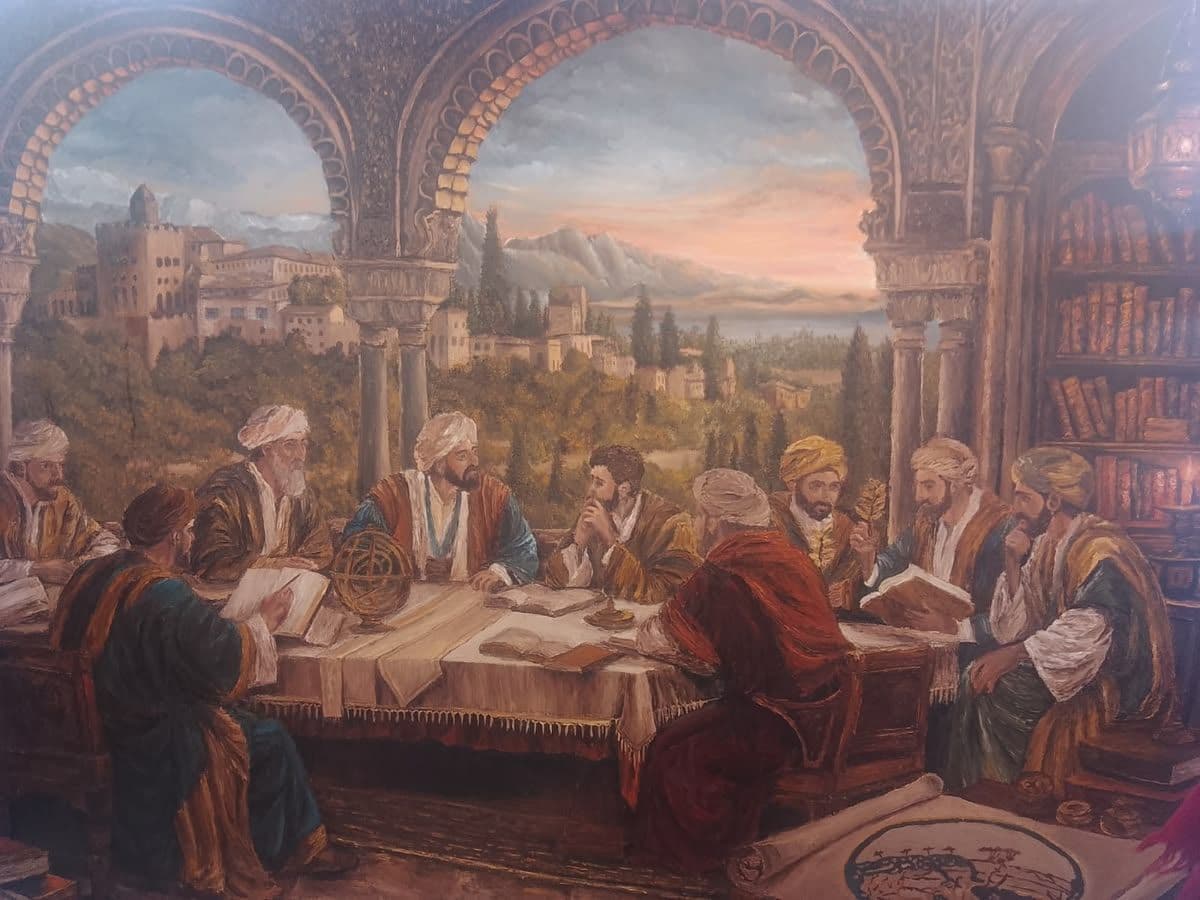
We know of the soul that breathed new life into Sylhet.
We know of the soul that breathed new life into Sylhet. Of the caravan that brought him to the subcontinent of India all the way from Konya. Of the man that tasted the soil of Sylhet and found it reminiscent of the sacred earth of Makkah, choosing to make this land his home.
We know of Hazrat Shah Jalal, the saint that brought a new of era into the land of Sylhet, whose name is etched into the history of this scared region, where the streets sing songs of him seven centuries later still.
But history is like a lantern. It follows the figure on the front, shining brightly atop his head as generations come to commemorate him, but not those that followed behind him. Today, we have schools, universities, airports and cities dedicated in his name, but fewer remember the ones that helped make Sylhet what it is today.
Yet, the hills of Khadim Nagar tell a different story. Of a man that walked where the lantern did not shine. Of a man that arrived not with riches or gold and an army at his beck and call, but with a heart full of devotion to God and a mission to preach Islam.
That hill, sings the name of Hazrat Shah Farhan, or as Bangladeshi’s like to call him, Hazrat Shah Poran (RA).
I made my home in Khadim Nagar. In this hill that still remembers the saint that helped make Sylhet what it is today. But like many, I too had little knowledge of who this said saint was. Like many, I marveled at the stories of Shah Jalal and his conquest, but never bothered to shed light on those following behind him.
Until I saw the hill for myself.
The questions did come all at once, but gradually as my curiosity grew. But the first of them all was, who is the man buried on that hill?
Before it became a place of prayer and devotion, that hill had been but a silent home for a traveler that had left his birth land miles away to make this place his new home.
According to scholars, Hazrat Shah Paran was the nephew of Hazrat Shah Jalal, son to his sister about whom little is known. Born in 1271, far from the lush greenery of Sylhet in the lands of Hadhramaut, Yemen, though some historians believe the land of origins was like that of his Uncle, Konya, present day Turkey.
At the mere age of 11, Shah Paran lost his father in the year of 1281, becoming the ward of his grandfather, Syed Ahmed Kabir Shurawardi, who spent the rest of his life teaching Shah Paran to become the man he would be remembered for. Once he was in the ripe age to be a young man, Shah Paran decided to join his uncle in the expedition to the Indian Subcontinent.
Little is known about the exact time of departure, but what is known for sure, is that in the year of 1303, the band of preachers finally made their way into the heart of the region that would shape all of their futures- Sylhet.
From this moment on, I already knew the story. I knew about Burhanuddin, the man who had his baby murdered before his eyes merely because the akika ceremony for his son upset Raja Gaur Govinda. About the tears of justice, he shed to Sultan Shamsuddin Firuz Shah of Bengal.
The conquest of Sylhet thus began, but it did not end in the first attempt. The first to lead the campaign was Sikander Khan Ghazi, but he failed miserably. So, the sultan sent Nasiruddin with an army, and it was during his campaign did he come across the band of dervishes from Konya, led by Shah Jalal, which was the turning point for the army who now held a spiritual allegiance for the conquest of the sacred lands of Sylhet.
I knew this much alright, but the real question was, what was the role of the man buried on that hill? And how is he significant to it?
Shah Paran took part in the conquest alongside his uncle. There is no record of him that describes him fighting the Raja gallantly, or a commander that saved Sylhet with an army of three thousand. It would be fun to read such a record, could also explain all the admiration people had when visiting the hill, but that was not the case.
Shah Paran, like his uncle, helped restore a lost glory back to Sylhet, pronouncing it one of the scared lands of Islam. Like the rest of Shah Jalal’s followers, Shah Paran merely did his job.
So why is he revered so?
After the conquest, the band dervishes began to disperse, their mission in Sylhet having been fulfilled. While some went home, some scattered across the continent, and fewer still chose to stay, to make Sylhet their new home. One among them was Shah Paran.
History did not revere him because he was a gallant warrior that fought like Zulfiqar had come to life, but because he was one that chose to stay. The one that believed in the people of Sylhet, in the vision his Uncle had, and decided to protect and guide the people residing there.
And like him, those who remained began settling in different corners of the region, establishing khanqahs, teaching the Qur'an, guiding communities, and planting the seeds of a spiritual tradition that would flourish for centuries. The story of Sylhet was never written by one saint alone. It was carried forward by an entire brotherhood of dervishes, each leaving behind a legacy of his own, names like Shah Ma'lum and Tajuddin Quraishi, men I would come to know only as my curiosity deepened.
Among those names however, one lingered the most, perhaps because hisw final resting place was right where I called my own home. Perhaps because the path that led him there was not because of his triumph in the conquest, but because of what followed after wards.
Of the debated story regarding the jalali pigeons, and how that one mistake would go on to shape the rest of his future, and that of Khadim Nagar.
History is indeed like a lantern.
It shines upon one figure the brightest while the ones following behind him are left in the shadows. But perhaps they are not in the shadows after all. They are not in the limelight either, but perhaps somewhere where they await someone to share their story.
Hazrat Shah Farhan, or commonly known as Hazrat Shah Paran (RA) would go on to spend the rest of his life at his khanqah atop the hill in Khadim Nagar, never marrying. The young traveler that crossed continents for his uncle in pursuit of faith. The dervish that chose humility over disappointment. He’d spend the rest of his life devoting his time in spreading the message of Islam to the people of Sylhet, offering shelter to those in need, leaving a legacy that his thrived and inspired for centuries.
So, the next time I find myself walking through Khadim Nagar, through the shrine atop the hill, I’ll know it isn’t just a story of a dervish who helped shape Sylhet from a place where the lantern light had already faded.
It’s the story of a saint that chose to stay.