
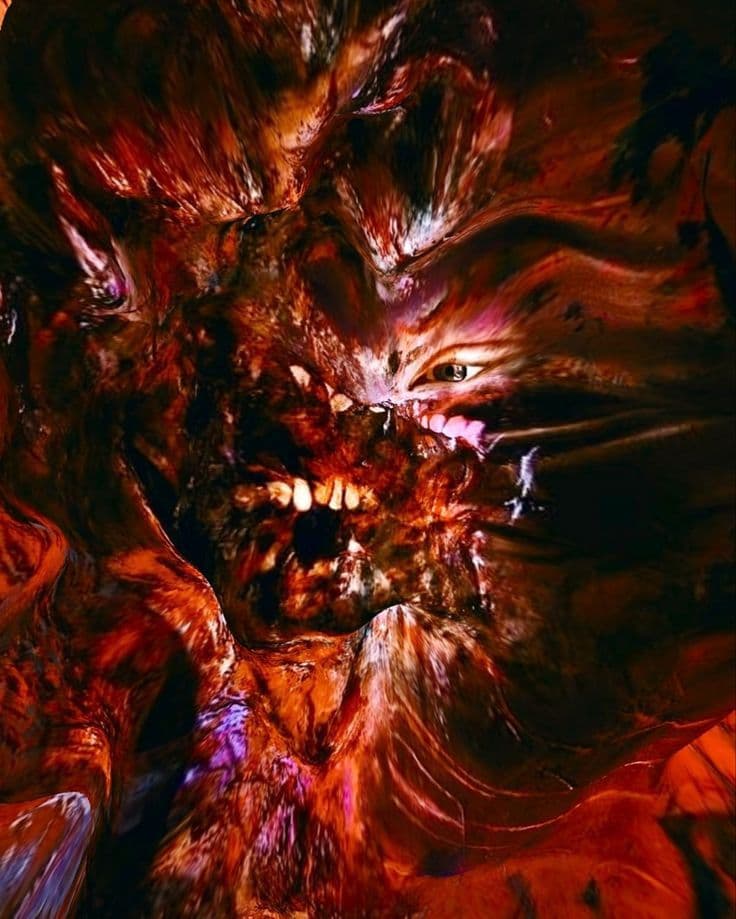
War feeds on nations; hunger feeds on men—until the starving can no longer tell whether they are victims, survivors, or cannibals.
Dedicated to Palestine
War feeds on nations; hunger feeds on men—until the starving can no longer tell whether they are victims, survivors, or cannibals.
I do not remember the day we stopped being counted as men and became, instead, numbers on a list that grew shorter by the week. I remember only that one morning I woke and found I could see my own ribs through my shirt, as though the shirt itself had grown transparent from hunger, and I thought: this is not so bad, I can still see. There are men who cannot see anymore. I considered this a kind of fortune.
They kept us in the low building behind the works, where the machines had once made something — I never learned what, and by the time I arrived the machines were silent, gutted, their bellies opened and picked clean of anything that might be sold or melted or eaten, though of course metal cannot be eaten, we had tried. I had tried. I had put a screw in my mouth once, only to feel its shape, only to remember that my mouth still had a function beyond breathing.
Each morning they lined us in the yard and each morning the line was shorter, and no one asked where the missing had gone, because to ask was to invite the question to turn and look at you, and none of us wanted to be looked at. I stood between a man named Pavel, who had once been fat and now wore his old fatness like a coat two sizes too large, folds of skin hanging where flesh had been, and a boy whose name I never learned because he stopped speaking in the second week and never started again.
They did not need whips. Hunger is a whip that never tires, that needs no arm to swing it. But they used whips anyway, I think because a whip is a sound, and sound reminds a man that he is still a subject and not yet a corpse, and perhaps this too was a mercy, though I did not think of it as mercy then. I thought of nothing then except the next mouthful, and after the next mouthful, the one after that, and in this way a man's whole mind can be reduced to an arithmetic of small forward motions, one gram, one gram, one gram.
Then came the day they stopped bringing the ration at all.
We waited by the door the way animals wait, without dignity, because dignity is the first thing hunger sells and the price is always fair, always exactly what you can afford, which is to say everything. Pavel did not wait long. On the third day of nothing he simply lay down in the corner and did not rise, and on the fourth day two men I did not know went to him with a tenderness that sickened me more than any violence I had witnessed, because it was the tenderness of men handling something precious, something they had waited a long time for.
I told myself I would not watch. I watched.
I told myself I would not partake. I do not remember deciding otherwise. I remember only the taste, which was not the taste of triumph or even of relief, but simply the taste of continuing, the way water tastes of nothing except that it lets you go on being thirsty tomorrow instead of never again.
And when it came to be my turn — when the fever took me in the sixth week and I did not rise, and I felt hands lift my arm the way I had once lifted Pavel's, weighing it, considering it — I understood that I had become, without ever choosing it, both the feast and the guest at the feast, the eaten and the eater, and that there was no arithmetic left that could tell me which one I truly was.
And I watched them eat the flesh of them, I ate mine too. My.. own... Flesh. Did I also become a cannibal?