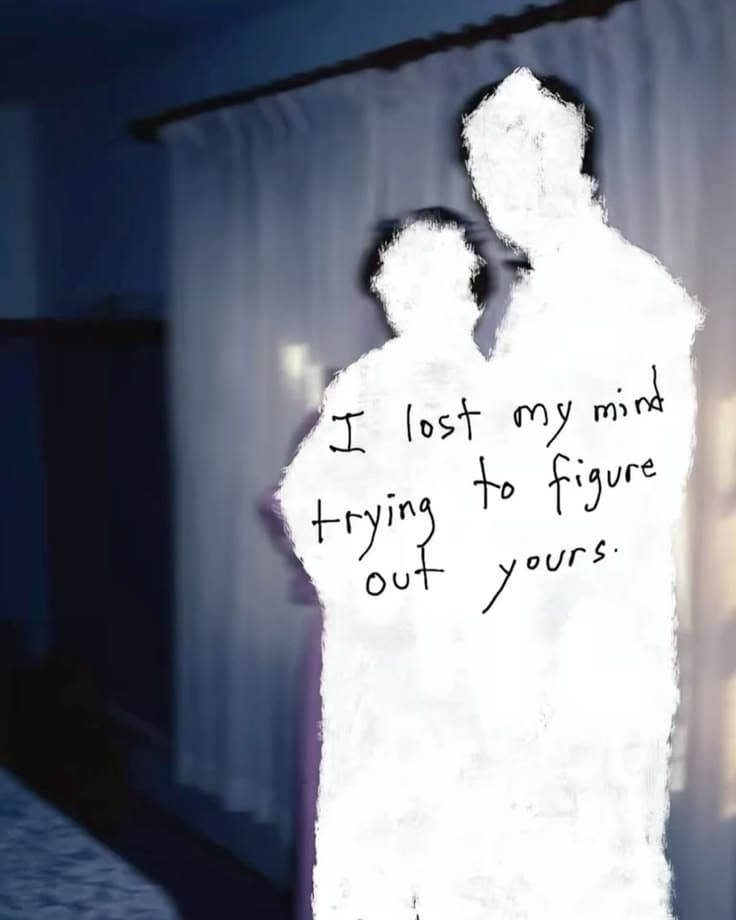
There are people who enter our lives so quietly that we cannot identify the precise moment they begin to haunt us. They do not arrive like disasters. They arrive ordinarily: through hallways, passing conversations, fleeting glances — the accidental intersection of two otherwise unremarkable lives. Then, for reasons we cannot adequately defend, they become extraordinary. Not necessarily because they possess anything extraordinary, but because we begin to place extraordinary things upon them. Their silence becomes a language. Their smallest gestures begin carrying disproportionate weight, and in someone’s memory, it is etched as a philosophy of hope. The tragedy is that the other person may never know. They continue living their life. They forget conversations another person has replayed for years. Two people can inhabit the same memory without ever having shared the same experience.
We tend to believe suffering requires an event like a rejection, a betrayal or a goodbye. However, some of the most enduring forms of pain arise from what never really happened. There is no relationship to mourn, no promise to break, no definitive ending to make the grief comprehensible. How does one grieve an almost? Or was it even an almost from the other end? So, the mind, intolerant of unfinished things, begins constructing its own explanations. It takes fragments and builds architecture from them. A glance becomes a window. A silent ritual with them becomes the foundation stone. Eventually, the architecture becomes more convincing than the ground upon which it stands. And the person who built it begins to live inside. However, something else happens, too. You become aware that someone is watching. Before someone else's opinion matters to us, we are relatively free.
We can be awkward, ridiculous, excessive, ordinary. We can experiment with different versions of ourselves without wondering which one will survive in someone else's memory. Then the self acquires an audience. Every action develops a possible interpretation. Every mistake feels permanent. Every embarrassing moment becomes something that might have been witnessed and remembered. We begin to see ourselves from the outside, through a pair of eyes whose judgment we cannot control. One no longer wishes simply to be liked. One wishes to be correctly understood. One wishes for the humiliating chapters to be contextualised. To have the strange behaviour explained. To have the worst version of oneself recognised as an aberration rather than a revelation. You saw me, but you did not see all of me. So, the performance begins.
One becomes more careful about the construction of a life that might look interesting from a distance. One hopes that they will one day be understood for their behaviour based on how much they have changed now. There is nothing inherently false about it, but the cruelty begins when they must eventually be witnessed by the person whose gaze we have internalised before they can feel real. A life becomes a portfolio submitted to an absent examiner. Yet, the examiner never asked for it. We begin asking questions that appear to concern another person but are, in truth, questions about ourselves. What will they remember? Have I changed enough? What would they think of my present self? Beneath these questions lies another: is it possible to become someone new without first being forgiven for who we used to be? Perhaps this is why certain people become so difficult to forget.
They become attached not merely to our desire for them, but to our desire to revise ourselves. We mistake the two longings for one. We believe we want their attention, when what we may want is an opportunity to stand before them without shame. We believe we want them to choose us, when what we may want is proof that the person we once were is no longer the only person we can be. The distinction is difficult to perceive because both desires occupy the same body. Both can make an ordinary day feel unbearable. Both can turn a passing notification into an event of unreasonable magnitude. This is why another person's happiness can hurt in ways that seem disproportionate to the event itself. A glimpse of a life continuing without us. However, another person's happiness is not an accusation. Perhaps freedom begins when we can encounter a reminder without turning it into a measure of our worth.
When we can wear something because we like it, listen to a song because it belongs to us, and allow these things to exist without the tormenting thought of how they might appear through another person's eyes. Their judgement is not a verdict on our own worth. We may never discover what someone from our past thinks of us. We may never know whether they remember us fondly, despise our existence, or rarely think of us at all. We may never receive the conversation that would place everything in its proper proportions. However, we must accept: they do not owe us an ending. This is not a satisfying conclusion. It offers no final correction of the past. It asks something harder of us — that our lives remain livable even when certain questions remain unanswered. Perhaps maturity is not the moment we finally receive the explanation we wanted.
Perhaps it is the moment we realise that even if the explanation came, it could not return the years we spent waiting for it. I sometimes think of the self as a house. We spend our early years building rooms without knowing what they are for. Some are bright and open. Others are constructed hurriedly around our fears. We leave certain doors unlocked, hoping someone will enter and understand what we have made. When they do not, we begin decorating the rooms they never saw. We imagine their eventual return. We keep the lights on. Years pass. The house changes. New rooms appear. Old walls are repainted. We discover windows opening onto landscapes we could never have anticipated. We meet people who sit with us without requiring us to explain every room. And still, sometimes, we find ourselves listening for footsteps at the front door.
Not necessarily because we want the person outside, but because we have spent so long believing that their arrival would prove the house was worth building. One day, perhaps, we notice the absurdity of it. We have missed entire evenings of our own life listening for someone who may not even know the address. So we turn off the porch light. Not in anger. Not to punish the person who never arrived. We turn it off because there are things to do inside. The house was never supposed to be a monument to an absent guest. It was supposed to be a place to live. So, perhaps that is the quietest form of freedom was not becoming someone worth witnessing, but realising that you were never required to be witnessed at all.